What Happens to a Slab Before Epoxy Goes Down: Cracks, Patches and Prep
Most of an epoxy job happens before any color is mixed, and the slab decides how the finished floor holds up.
October 13, 2026 · 3 min read
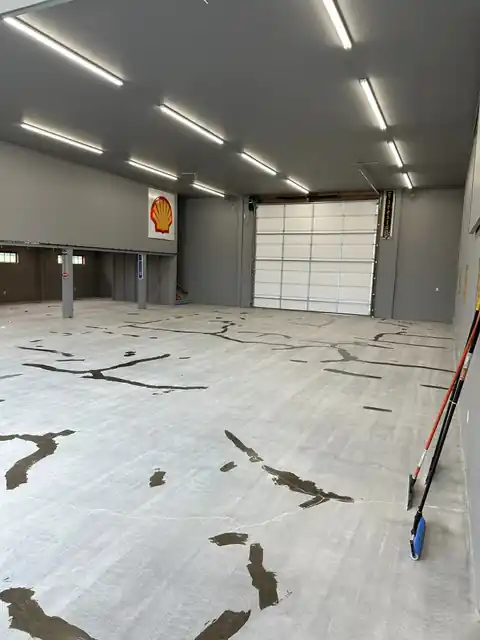
Ask anyone who's seen an epoxy floor peel and they'll tell you the same thing: it wasn't the epoxy. It was what the epoxy was stuck to. Garage and shop slabs carry years of oil, dust, sealers, cracks and patches, and a coating can only be as good as the surface under it.
That's why the work before the first coat is most of the job. Here's what a careful installer does with a slab, in the order it usually happens.
Reading the slab first
The first step is simply looking. A good installer walks the floor and checks for cracks, pits, flaking areas, old paint or sealer, oil stains and low spots where water collects. They look at the edges where the slab meets walls and the garage door. They may tap the surface to find hollow areas that suggest the top layer has let go.
History matters too. A slab with a thin film of old sealer needs different handling than bare, clean concrete. Knowing what's on the floor tells you what has to come off before anything new can go on.
Cracks, pits and patches
Most garage slabs have cracks. Hairline shrinkage cracks are common and are usually filled and leveled so they don't telegraph through the coating. Wider cracks, chipped joints and pits get opened up, cleaned and filled with repair material before anything else happens.
This step is where the finish gets decided. Metallic and solid color floors in particular show anything that wasn't repaired, because the gloss reflects every ridge and dip. Craig's photos include crack repair and patching on shop and garage slabs, taken before the coating went on.
Control joints are a separate question. They're cut into a slab on purpose so it can move, and an installer has to decide how to treat them so the coating doesn't crack along the same line. That decision depends on the slab and the system going down, and it's worth asking about.
Cleaning and opening up the surface
Epoxy bonds to clean, slightly rough concrete. Smooth, sealed or dirty concrete doesn't give it anything to grip. So the slab is mechanically prepared, usually ground with a diamond grinder, to remove old coatings and the weak skin on top and to open up the pores of the concrete.
Oil gets special attention. Oil that has soaked into the concrete can keep a coating from bonding, so heavily stained spots are cleaned and treated before anything is applied. The dust from grinding is vacuumed up thoroughly afterward, because a fine layer left behind weakens the bond.
- Old paint, sealer and coatings are removed or ground back.
- Oil and grease are cleaned out as far as the concrete allows.
- The surface is opened up so the first coat has something to grip.
- Dust is vacuumed before any liquid goes on the floor.
Moisture, temperature and timing
Concrete can pass moisture up from the ground below, even in a slab that feels dry. Moisture trapped under a coating is one of the usual reasons floors blister or lift. A careful installer thinks about it before coating, particularly on older slabs or ones that sit below grade.
Temperature matters as well. The slab and the coating both need to be in a reasonable range when the work happens, and a very cold garage or a hot afternoon can change how the material behaves. Picking the right day is part of the prep.
Edges, masking and the last check
Before coating, the edges get taped off so walls, trim and thresholds stay clean and the finish ends in a crisp line. The blue tape lines in Craig's garage photos are that step. Then comes a last walk across the floor to look for anything missed: a pit that wasn't filled, a patch that isn't flush, a patch of dust.
Only then does the base coat go down. If you're collecting quotes, ask each installer how they prepare the slab. The answers tell you a lot about how the floor will hold up. An installer who talks about grinding, crack repair and cleaning before talking about color is thinking about the right things, and one who skips straight to the swatches may be rushing the part that matters most.
Craig's Garage Floor Epoxy page walks through how a garage slab is handled from repair to coating. To talk about your own slab, book a consultation at (509) 492-8403.
Columbia River Coatings, (509) 492-8403
Call (509) 492-8403More articles
Metallic, Flake or Solid Color: Choosing an Epoxy Garage Floor Finish
Three finishes sit on the same prepared slab, and each one behaves differently once you start living with it.
When a Pitted Concrete Driveway Can Be Overlaid Instead of Replaced
A rough, crumbling surface is often a skin-deep problem, and the slab underneath may be worth keeping.