Metallic, Flake or Solid Color: Choosing an Epoxy Garage Floor Finish
Three finishes sit on the same prepared slab, and each one behaves differently once you start living with it.
October 13, 2026 · 4 min read
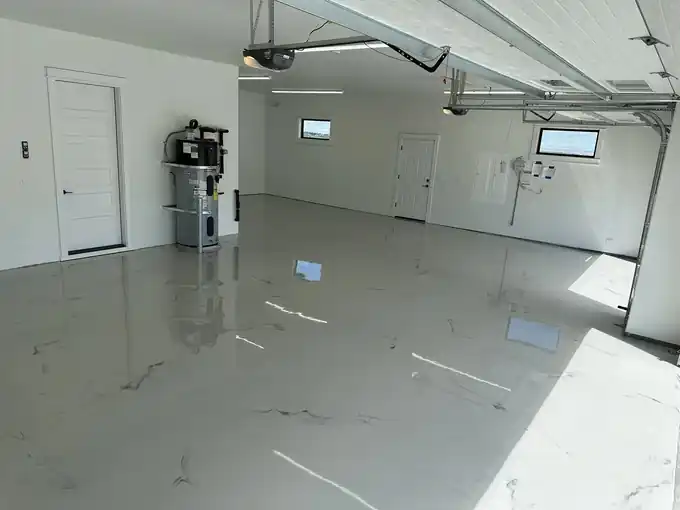
Walk into any epoxy conversation and the first question is usually the same: what should the floor look like? In a garage there are three main answers. Solid color, flake, or metallic. They all start with the same prepared slab and the same kind of resin, but they behave differently once you live with them, and they ask different things of the person laying them.
Here's how to think about each one before you pick a swatch.
Start with how the floor gets used
Before color, think about traffic. A garage that holds two daily drivers and a shelf of paint cans has different needs than a workshop where parts get dropped, or a showroom-style space where cars are mostly parked and admired. Wet boots, tires, road salt tracked in during winter and the occasional oil drip all end up on the same few square feet by the door.
A floor that hides dirt and gives your feet some grip suits a working garage. A floor that shows off depth and shine suits a space that's more about looks. Nobody has to choose one forever, but it helps to be honest about which kind of space you actually have.
Solid color: clean, bright and honest
A solid color floor is one even color, edge to edge, with a glossy finish. It's the simplest of the three, and that's its strength. Light grays brighten a garage and bounce light back up from the floor, which helps if the space only has a couple of overhead fixtures.
The tradeoff is that a single color shows its flaws. Roller marks, missed spots and uneven edges have nowhere to hide, so the quality of the installation matters more here than the shade you choose. Lighter grays tend to hide dust better than black, while very dark floors show every footprint and speck. If you want the cleanest, brightest look, this is the one.
Flake: texture, grip and forgiveness
Flake systems start with a base coat, then colored chips are broadcast across the wet surface until it's fully covered. The extra chips are cleared away and the floor is sealed with a clear topcoat. The result is a speckled, multi-color finish with a bit of texture.
That texture is the point. Flake gives you some slip resistance when the floor is wet, and the pattern hides dust, scuffs and small marks between cleanings. It's a practical choice for garages, shops, trailers and boat decks, which is why you see it in so many working spaces. The chips come in plenty of blends, so you can go quiet with grays and tans or bold with blues and blacks.
Flake isn't right for everyone. The surface is slightly textured, so it won't feel as glass-smooth as a solid or metallic floor, and a broadcast that stops short leaves bald patches. Full, even coverage is what makes it look finished.
Metallic: the showpiece
Metallic epoxy uses pigments that catch light and move through the resin in swirls and veins. No two floors come out alike. White marble looks, black with gold veining, cream and bronze, and silver with dark lines are all possible, and the pour is worked by hand so the pigment settles where the finished pattern calls for it.
It's the most dramatic option and the least forgiving to install. Metallic shows everything under it, so cracks, patches and uneven spots in the slab have to be dealt with before a drop of color goes down. It's also glossy enough that scratches read more on dark colors. For a garage that's part showroom, a modern interior or a retail floor, it's hard to beat. For a garage that sees heavy tools and dragged equipment, it may be more floor than you need.
A few ways to narrow it down
- Mostly a working garage with wet boots and tools: flake is the safest bet.
- Want it bright, clean and simple: solid color in a lighter gray or tan.
- Want a floor people comment on: metallic, with the slab prepared properly first.
- Worried about scratches: pick a color with some variation, since pure black and pure white show wear fastest.
Ask to see the finish in person if you can. Colors look different under garage lights than they do on a screen, and photos only go so far. A good installer will happily talk through samples and what each one will look like in your space.
Craig's Metallic Epoxy Floors page covers the pour and the looks he works in, and the Epoxy Flake Systems and Solid Color Epoxy Floors pages cover the other two. When you're ready to talk through your own slab, book a consultation at (509) 492-8403.
Columbia River Coatings, (509) 492-8403
Call (509) 492-8403More articles
When a Pitted Concrete Driveway Can Be Overlaid Instead of Replaced
A rough, crumbling surface is often a skin-deep problem, and the slab underneath may be worth keeping.
What Happens to a Slab Before Epoxy Goes Down: Cracks, Patches and Prep
Most of an epoxy job happens before any color is mixed, and the slab decides how the finished floor holds up.