Living With an Epoxy Floor: Cleaning, Care and What Scratches It
An epoxy floor is easy to live with once you know what it likes, and a few habits keep it looking sharp.
October 13, 2026 · 3 min read
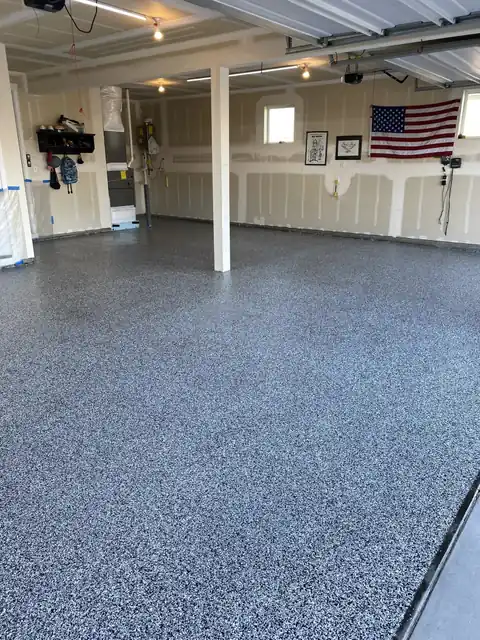
One of the best things about an epoxy floor is how little it asks of you. Unlike bare concrete, it doesn't soak up spills or shed dust, and a quick pass with a broom or mop handles most of what a garage throws at it. It isn't indestructible, though, and a few habits make a real difference to how it looks after a few years of use.
Here's what to expect and what to avoid.
Everyday cleaning
Start with grit. Sand, gravel and dirt carried in on tires and shoes act like sandpaper under foot traffic, so sweeping or dust-mopping regularly does more for the surface than any cleaner. A soft broom or a microfiber dust mop is plenty.
When it needs more than a sweep, use warm water and a mild soap or a cleaner made for coated floors, and a soft mop or a soft-bristle brush. Rinse and dry so a soapy film doesn't dull the gloss. Skip anything abrasive. Scouring pads and gritty powders leave fine scratches that you'll notice in raking light.
Spills, salt and stains
A cured epoxy surface is sealed, so most spills sit on top instead of soaking in. Oil, coolant, soda and tracked-in mud wipe up with a rag. Get to them sooner rather than later, especially anything acidic or chemical, because a long soak can still dull or mark a coating.
Winter is the season to watch. Eastern Washington road crews and homeowners use de-icers, and the slush that drips off a car carries that salt onto your floor. It dries into a white film. Rinse or mop it off now and then instead of letting it build up over a whole winter.
What scratches it
Epoxy is hard, but hard isn't the same as scratch proof. The things that mark a floor are usually the same few suspects.
- Dragging heavy items such as toolboxes, engine stands, metal shelves and equipment instead of lifting them.
- Grit trapped under jack stands, creepers and the feet of cabinets.
- Metal wheels and hard casters on rolling carts.
- Dropped tools, especially edges and corners landing point first.
- Scouring pads, wire brushes and stiff scrapers during cleanup.
Simple fixes help: felt or rubber pads under cabinet feet, rubber mats under jack stands, soft wheels on carts. Light surface scuffs in a clear topcoat can often be dealt with when the floor is next recoated, which is something to ask your installer about.
Tires, heat and chemicals
Cars come home hot and wet. Most coatings handle that, but an under-prepared slab or a thin do-it-yourself kit is where tire marks and lifting start. A floor that was prepared and installed properly stands up to normal parking far better. Brake fluid, battery acid and strong solvents are another story. Wipe them up promptly and don't leave them sitting.
Keep the door seal in good shape too. Water that runs in under the garage door and sits along the edge can work against any floor, so a working seal protects the coating at its most exposed point.
Choosing color with wear in mind
Color changes how a floor ages. A solid dark floor looks great on day one, and it also shows dust, footprints and scratches faster. Lighter grays hide dust better. Flake floors hide scuffs and dirt between cleanings because the pattern breaks up the eye. Metallic floors show their depth best when they're clean, and the glossier and darker they are, the more scratches read.
If low maintenance is the priority, a flake blend in a mid-tone is hard to beat. If the floor is a showpiece, plan on a soft mop and a little attention.
When a floor needs attention
A coated floor that has lost its gloss in the walking lanes, or has a worn patch or a lifting edge, doesn't need to be written off. Often the surface can be cleaned and recoated, which is much less work than starting over. Early attention beats waiting until bare concrete shows through. A yearly walk-around, with the floor clean and the light low, is enough to spot dull lanes, chips and edges that need a look before they turn into bigger repairs.
Craig's Garage Floor Epoxy page shows finished garages in several finishes, and his Epoxy Flake Systems page covers the low-maintenance end. To plan a new floor or ask about an existing one, book a consultation at (509) 492-8403.
Columbia River Coatings, (509) 492-8403
Call (509) 492-8403More articles
Metallic, Flake or Solid Color: Choosing an Epoxy Garage Floor Finish
Three finishes sit on the same prepared slab, and each one behaves differently once you start living with it.
When a Pitted Concrete Driveway Can Be Overlaid Instead of Replaced
A rough, crumbling surface is often a skin-deep problem, and the slab underneath may be worth keeping.