Hardwood-Look Concrete Overlays: Where a Wood-Plank Finish on Concrete Makes Sense
You get the warmth of plank flooring on a slab, without boards that swell or rot.
October 13, 2026 · 4 min read
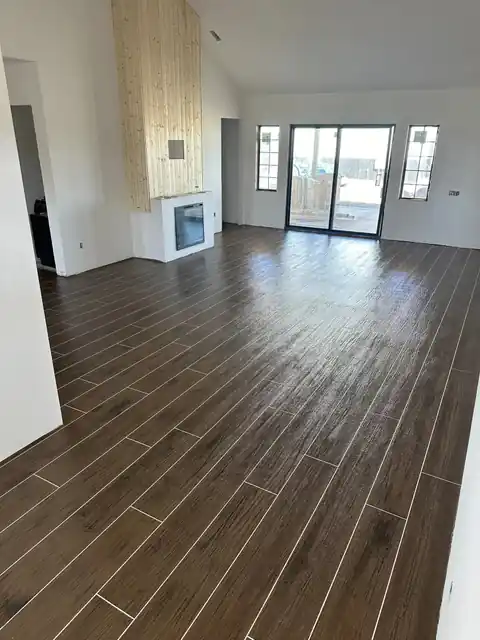
Plain concrete looks unfinished in a living room, and it looks tired on an old porch. Real hardwood is the obvious fix, but wood and slabs don't always get along. Moisture comes up through concrete, patios take weather, and boards on a slab can swell, cup and rot if conditions aren't right.
A hardwood-look concrete overlay takes a different route. It keeps the slab you've got and changes what the surface looks like. Here's what that involves and where it makes sense.
What a hardwood-look overlay is
It starts with a thin cementitious overlay spread across the existing concrete. While it's workable, a plank pattern is cut or stamped into it: board lengths, seams between planks and a grain texture that reads as wood. After it sets, the surface is stained, with color layered in so planks vary a little from board to board, like the real thing.
The result is a hard, sealed surface that looks like wood from across the room. Craig's photos include dark plank rooms, a warm brown plank living space and a stamped plank porch, all done on concrete.
Where it makes sense
- Porches and covered patios where real boards would see weather and moisture.
- Living spaces and basements built on a slab, where you want warmth without a wood subfloor.
- Entryways and hallways that take wet shoes and constant traffic.
- Shops, offices and showrooms that want a warmer look than gray concrete.
- Driveways and walkways, where a stamped plank pattern gives a finished look that plain concrete can't.
What these places share is a slab that's already there and a surface that has to cope with traffic, water or both. That's where an overlay earns its keep.
Cost and disruption matter too. Pulling out a slab to pour a new one, or building up a wood subfloor over it, means hauling, noise and a lot of time with the room out of use. An overlay works with what's already there, so the space stays a space while the surface changes. For a homeowner with a bare concrete floor and a tired porch, that's often the deciding factor, more than the look itself.
Where it's not the right tool
An overlay follows the slab beneath it, so the slab needs to be in decent shape. Sunken or heaved sections and wide, moving cracks are better addressed before any surface goes on. It also isn't a substitute for a surface you want to feel like wood underfoot. A concrete overlay is hard and cool, and it won't have the give of real boards.
If you love the sound and warmth of real wood floors, and the space is dry and above grade, hardwood may still be what you want. The overlay makes the most sense when the concrete is the practical reality and you want it to look good.
Planning the plank pattern and stain
Two choices drive the look: plank size and stain tone. Wider planks feel calm and modern. Narrower planks feel traditional. Dark stains look dramatic and hide dirt, while lighter ones open up a small room. Pick a tone with the room's natural light in mind, because the same stain can read very differently in a bright sunroom and a dim basement.
Variation matters. Real wood has color shifts from board to board, and a flat, uniform stain looks fake. A careful installer layers tone so the floor looks like it was assembled from individual boards. Ask to see finished work in person if you can, since photos flatten the depth of the stain.
Living with it
There are no boards to swell and no gaps to collect crumbs. The sealed surface wipes clean with a damp mop and mild soap, and the floor handles wet shoes and spills without drama. Keep the sealer in good shape, especially outdoors, and go easy on harsh de-icers on porches and driveways.
Hard surfaces can chip if something heavy is dropped on them, so felt pads under furniture and a little care with heavy objects go a long way. Small chips are easier to touch up than to ignore.
Outdoors, give it a rinse now and then to clear leaves, grit and salt. Indoors, a dust mop is usually all it needs between damp mopping. Because the planks are a pattern in the surface rather than separate boards, there's nothing to refinish or replace the way there would be with real wood, only the sealer to look after.
Craig's Concrete Hardwood Overlay page shows finished plank floors, porches and driveways. To see whether your slab is a good candidate, book a consultation at (509) 492-8403.
Columbia River Coatings, (509) 492-8403
Call (509) 492-8403More articles
Metallic, Flake or Solid Color: Choosing an Epoxy Garage Floor Finish
Three finishes sit on the same prepared slab, and each one behaves differently once you start living with it.
When a Pitted Concrete Driveway Can Be Overlaid Instead of Replaced
A rough, crumbling surface is often a skin-deep problem, and the slab underneath may be worth keeping.